Lakeside Yard Rebuild with Regrading and Hydroseeding
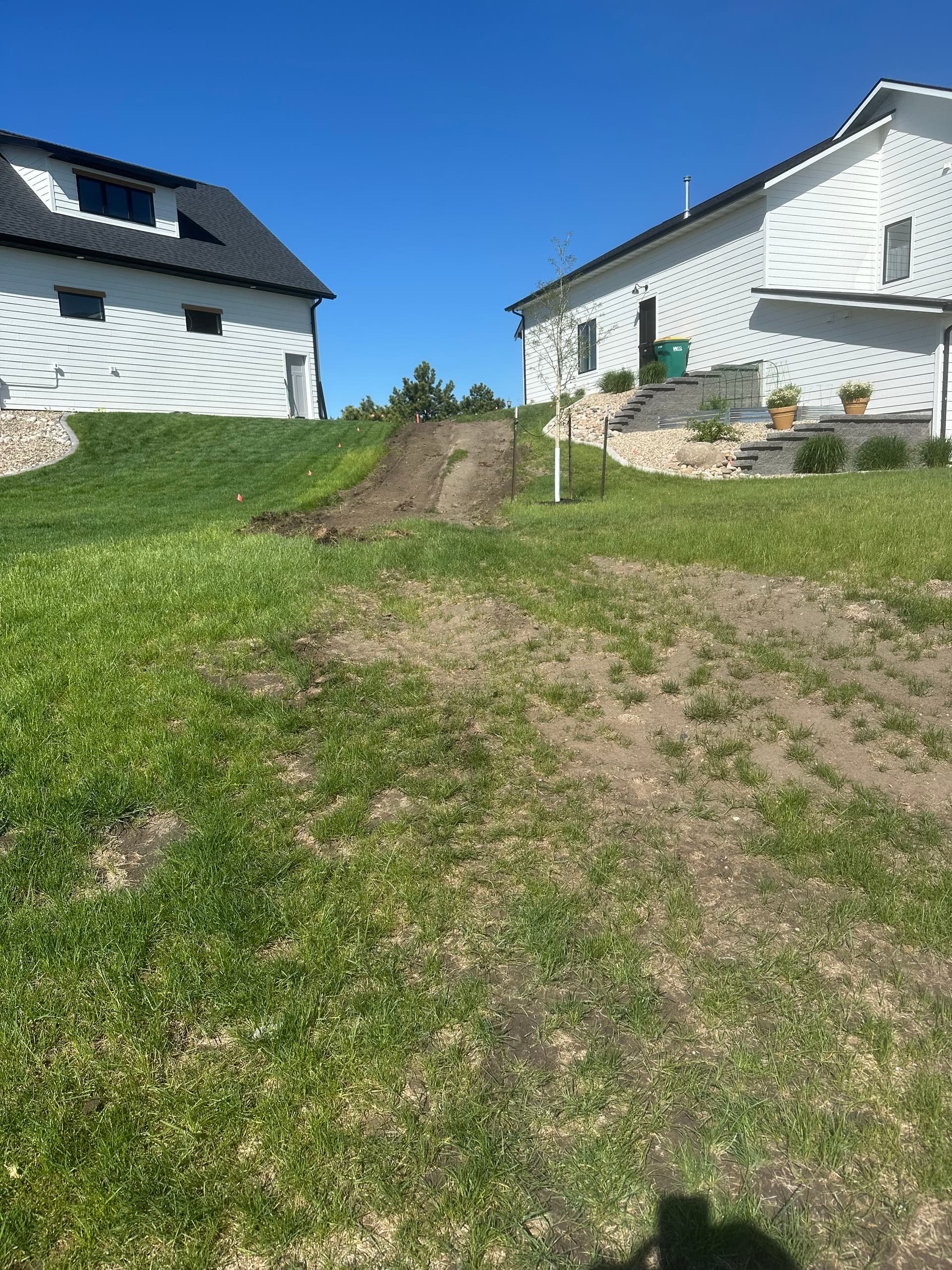
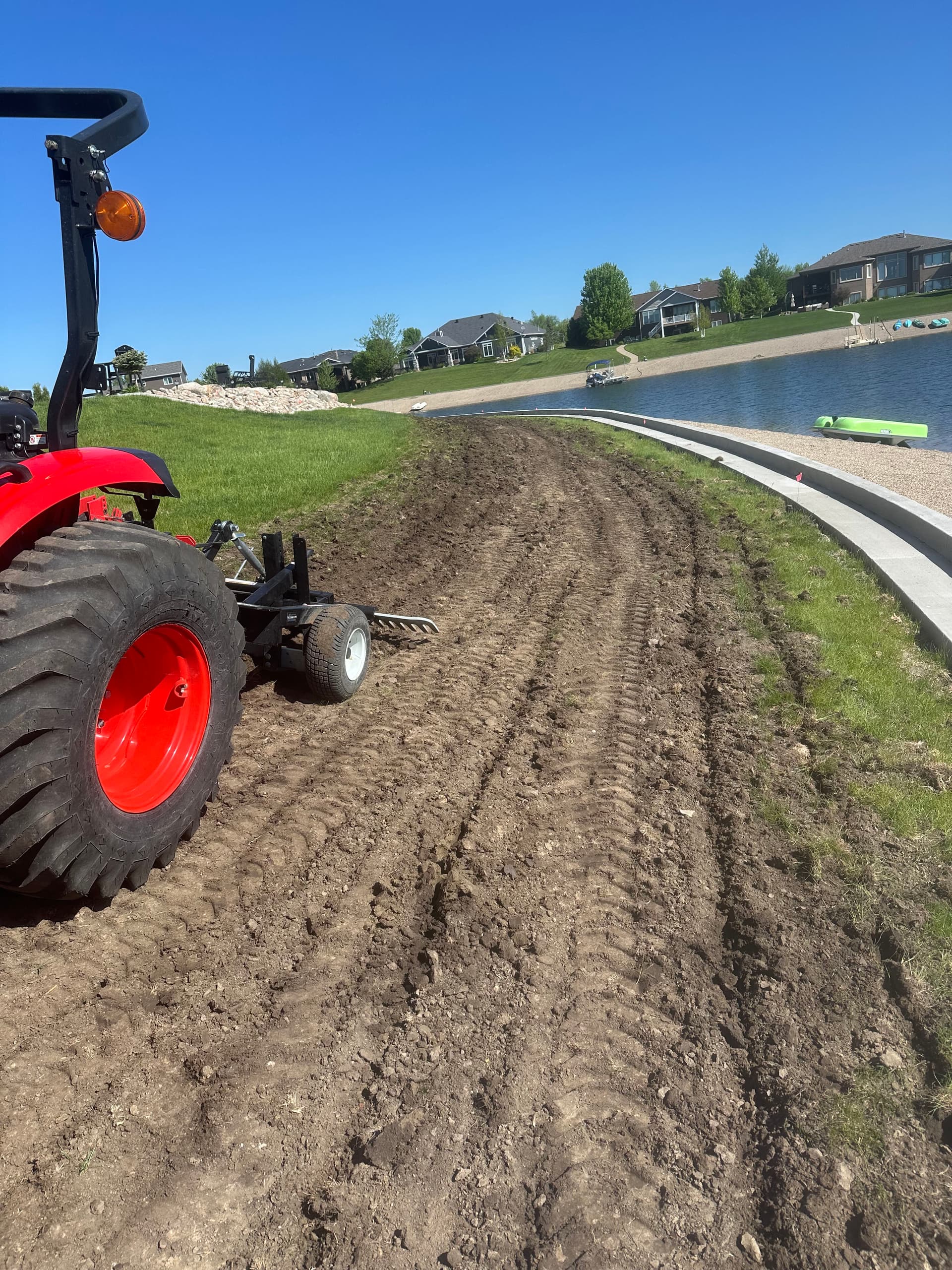
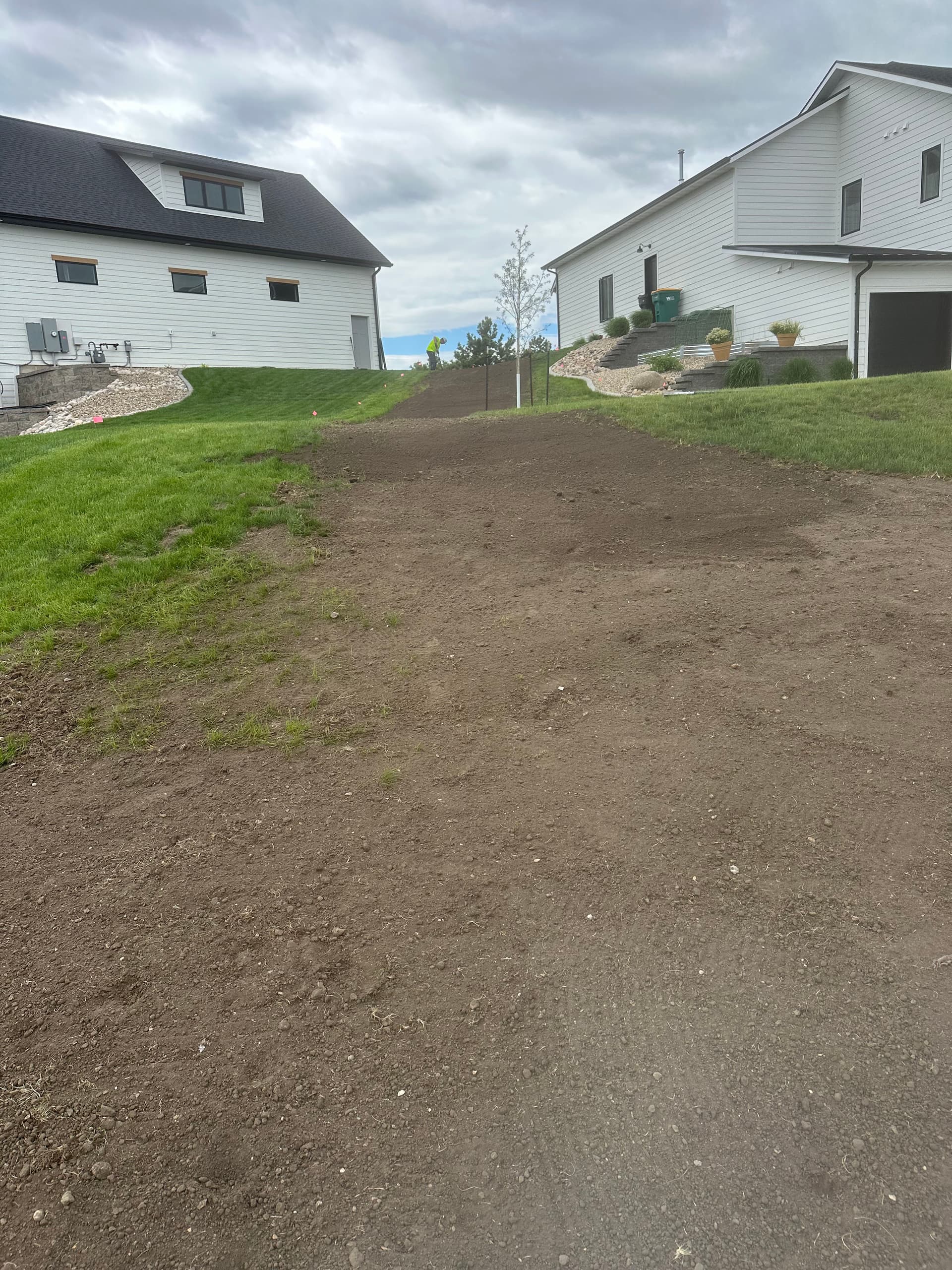
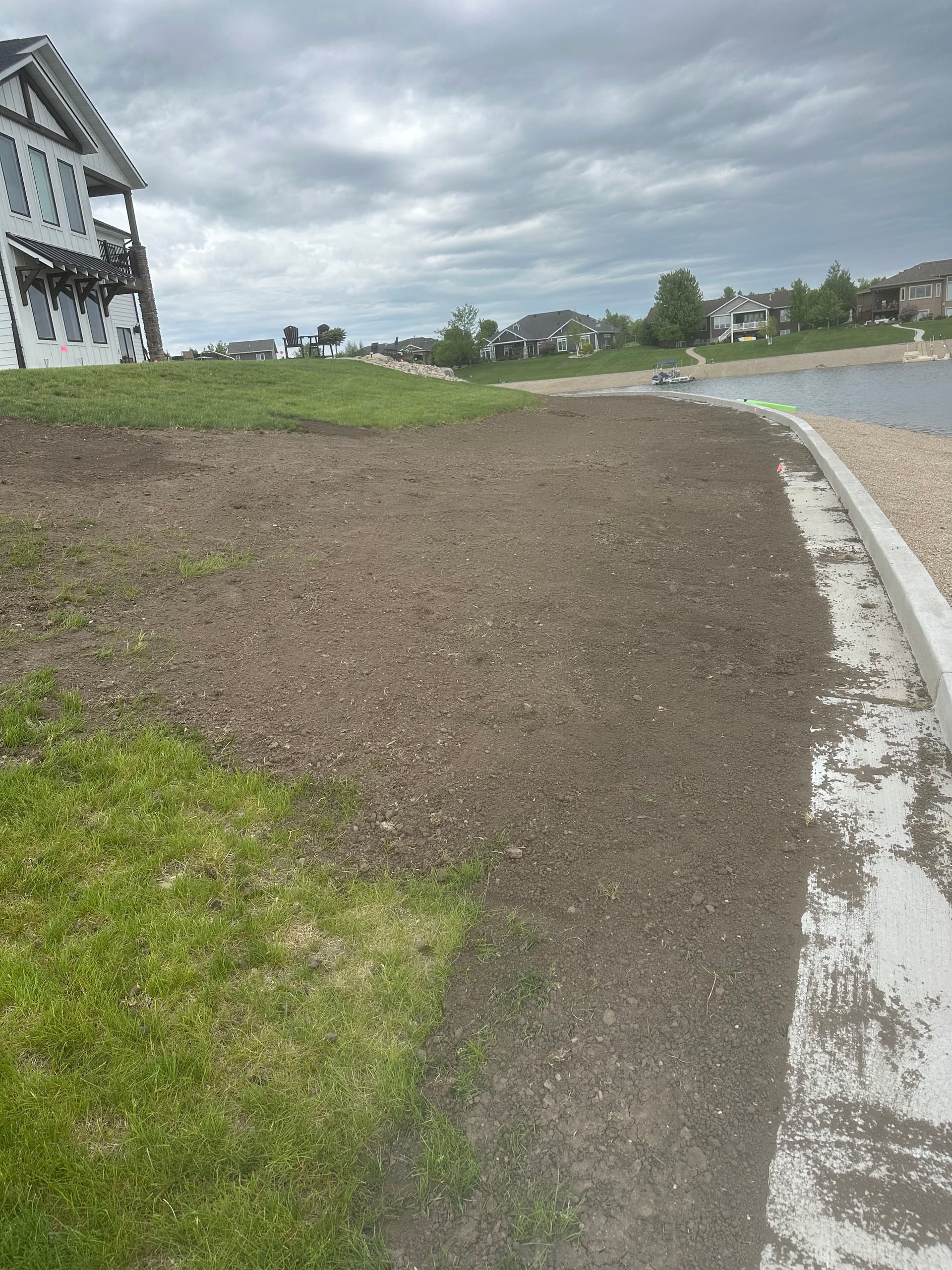
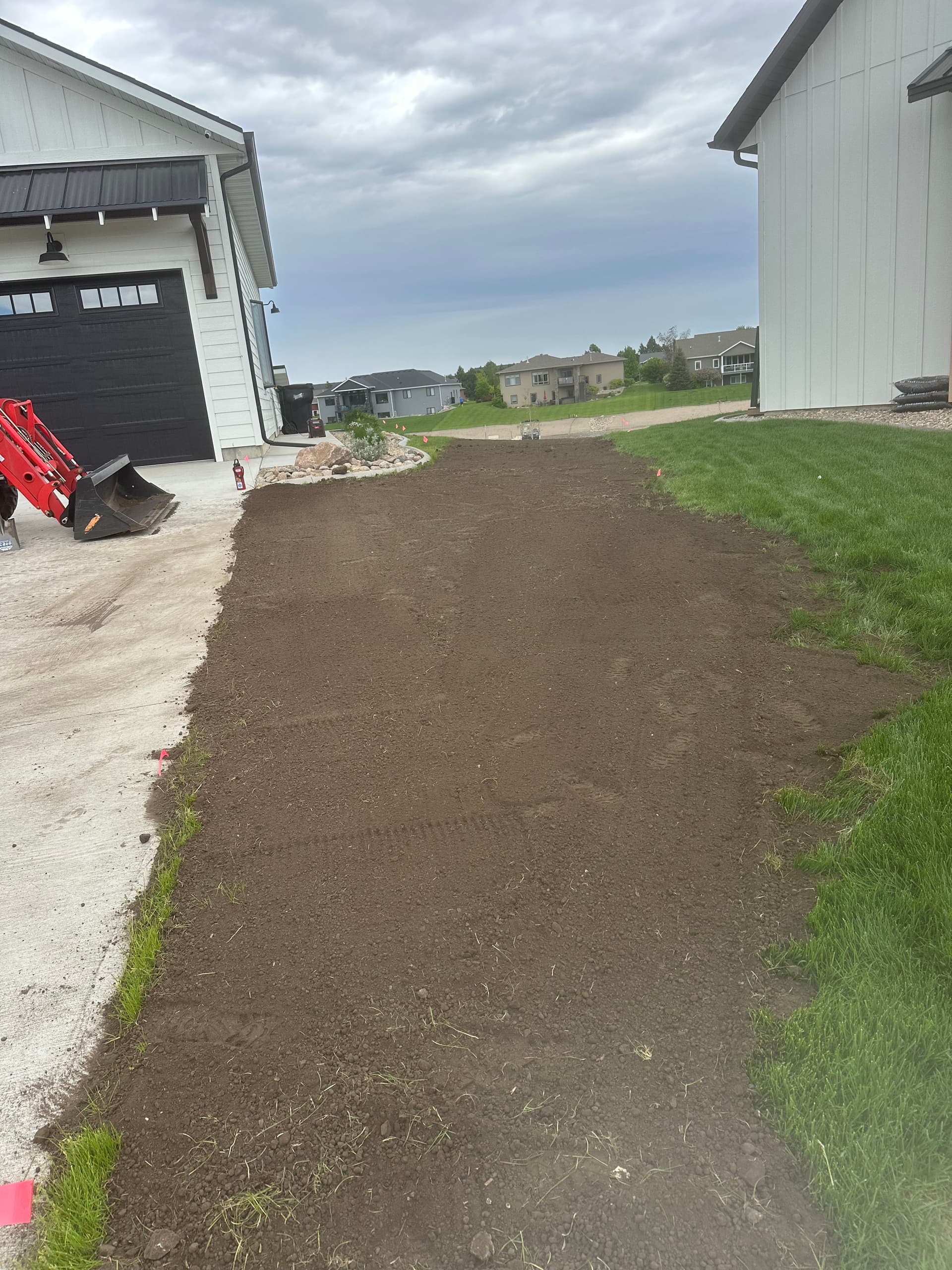
When a construction project tears up a yard, you're usually left with bare dirt, uneven ground, and no real plan to get it back. That's exactly what we were dealing with here - a lakeside property that needed a full rebuild from the ground up. Debris cleared, topsoil brought in, slopes regraded. The whole thing.
One of the first things we focused on was the grade. The existing slope wasn't mower-friendly, and on a waterfront lot, a bad grade means runoff problems too. We regraded to smooth everything out and create a slope that actually works - easier to maintain and less likely to erode toward the water's edge. That kind of prep work doesn't show up in a final photo, but it makes everything downstream better.
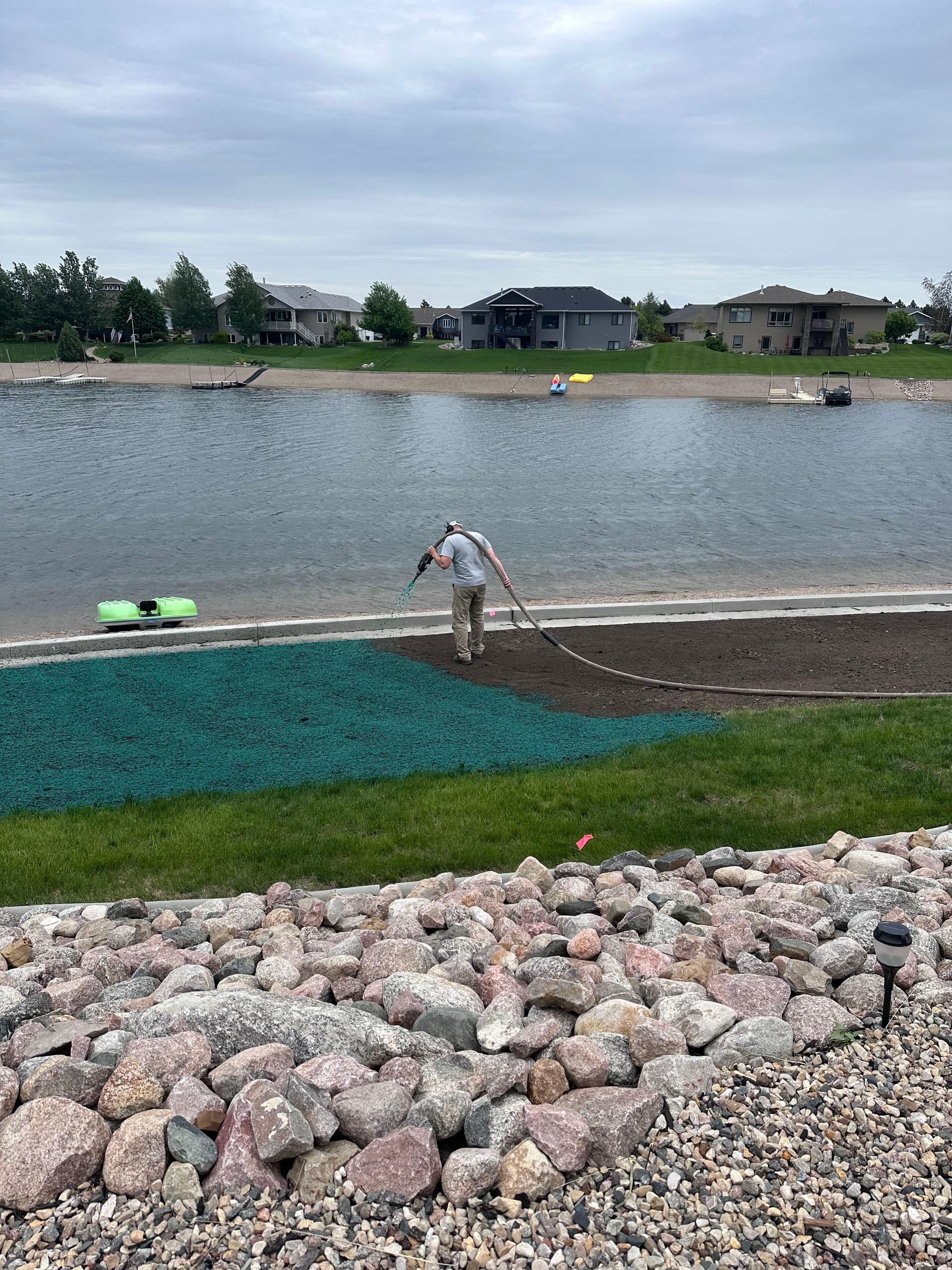
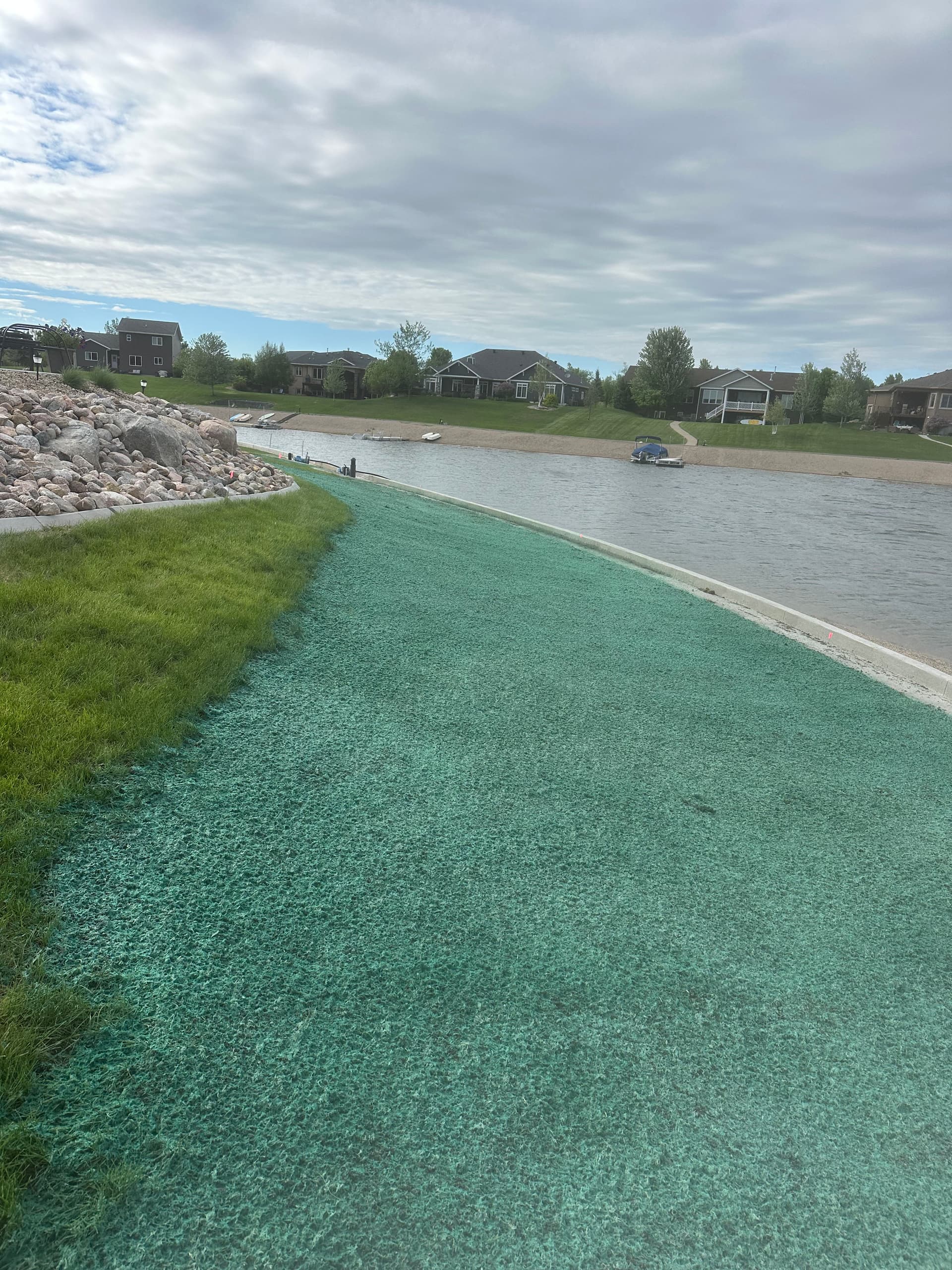
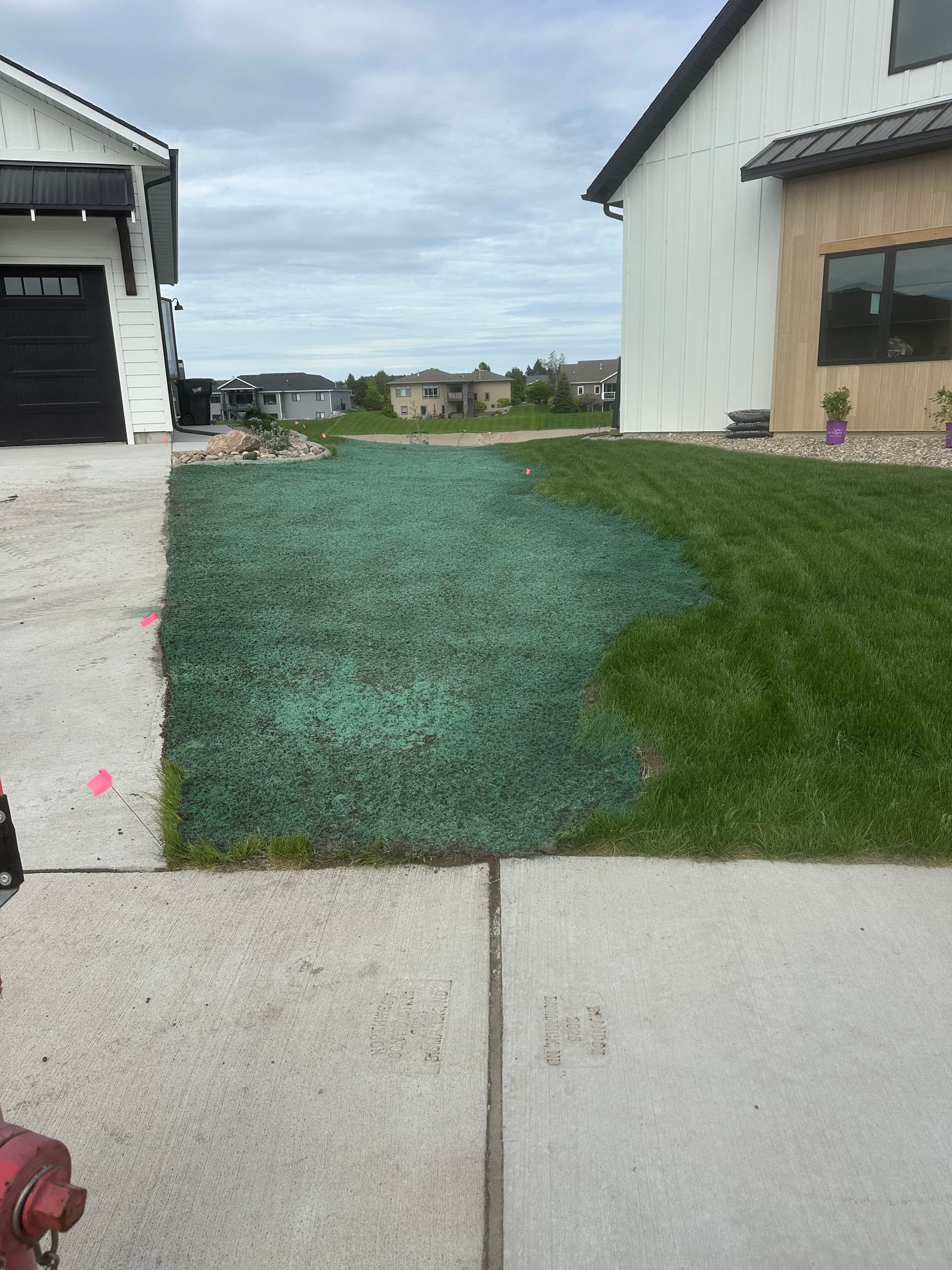
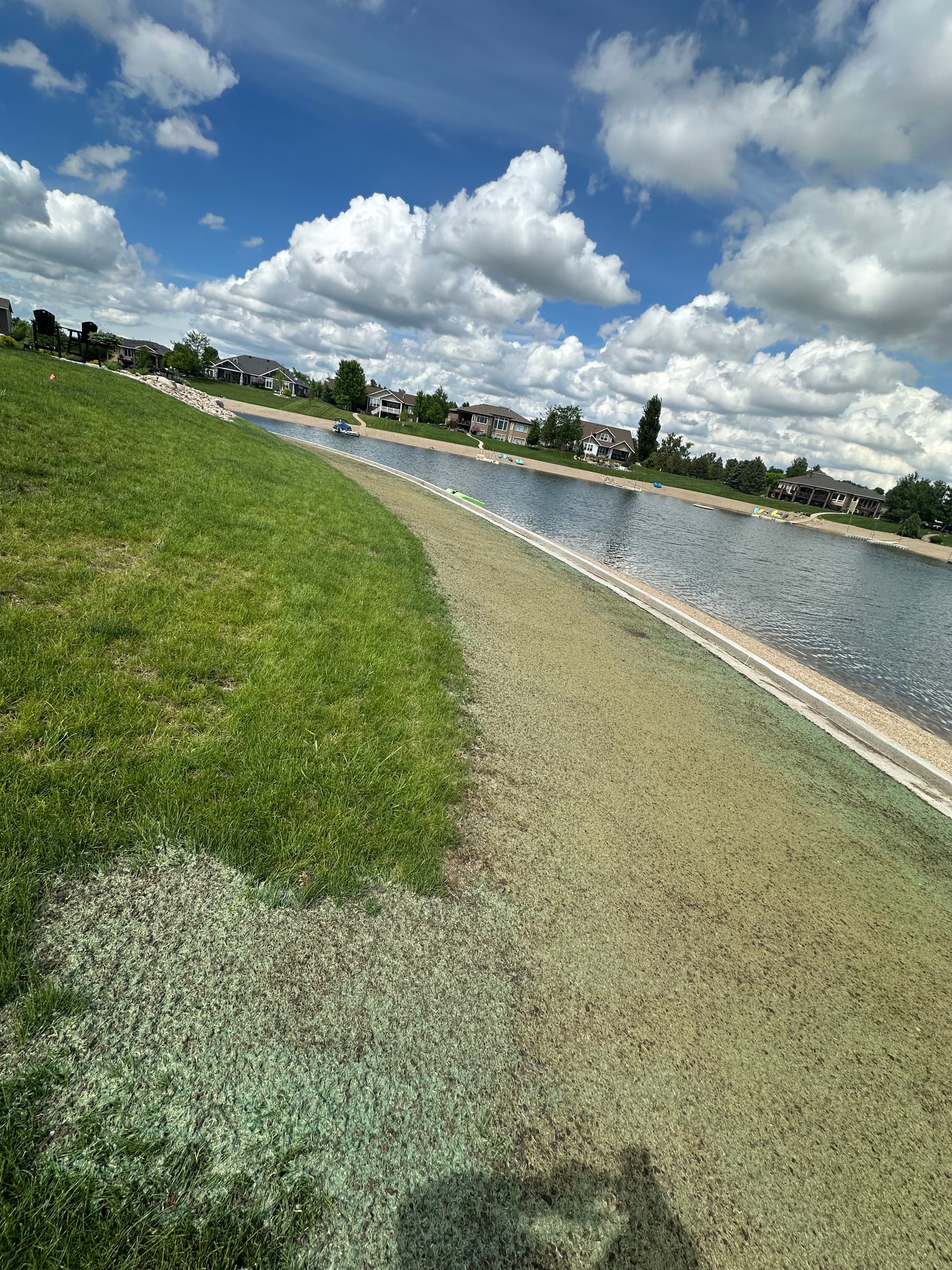
Once the ground was shaped and the seedbed was tight and ready, we moved into hydroseeding. The teal slurry you see going down isn't just for show - it's a mix of seed, mulch, and tackifier that bonds to the soil surface and holds everything in place. It's one of the best methods for slopes and large open areas because it establishes faster than broadcast seeding and protects against washout right from day one.
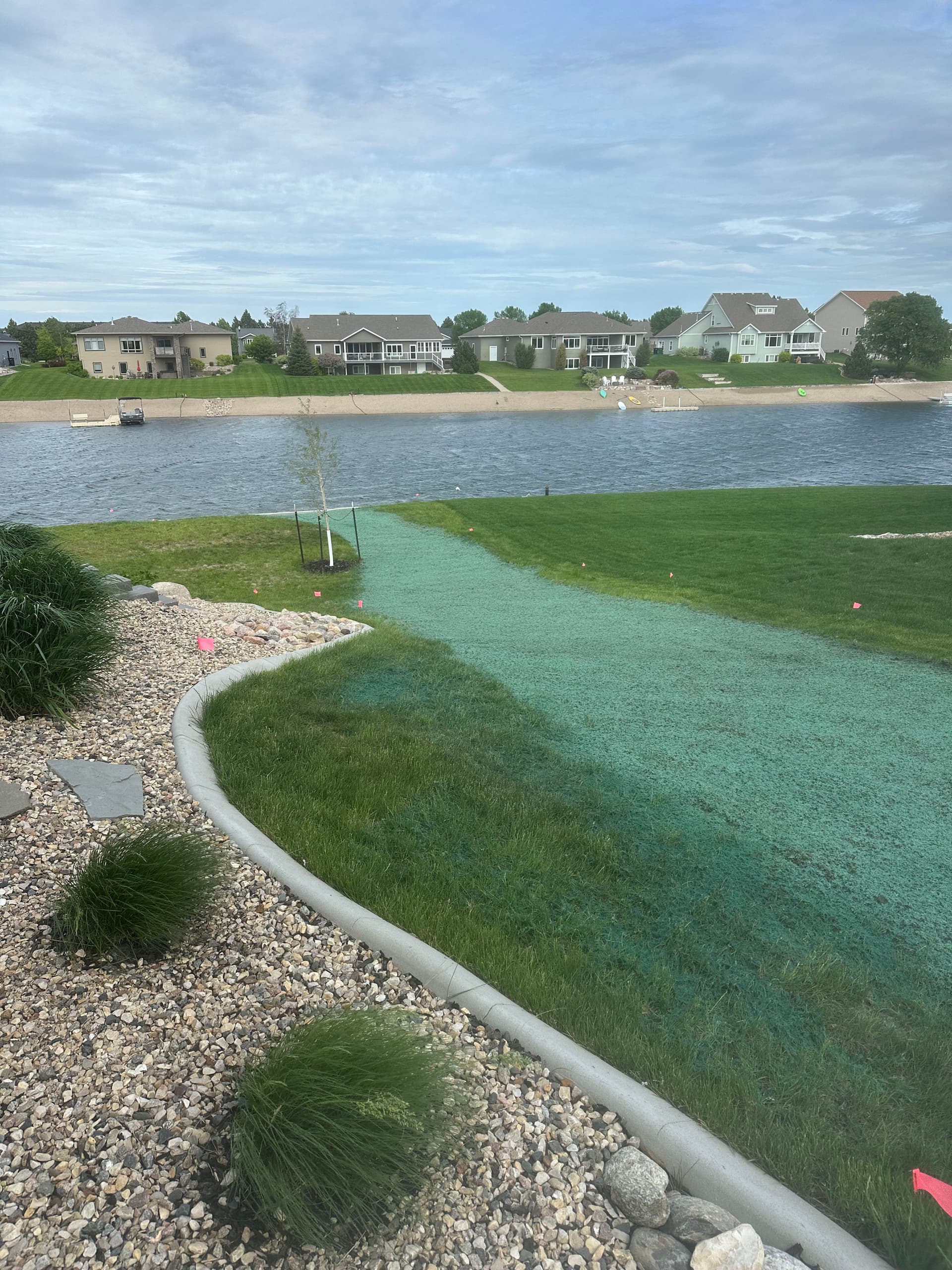
That last point matters a lot here. A heavy rain hit the day after we finished. The hydroseed held. No wash-off, no bare spots. That's not luck - that's what happens when the seedbed is properly prepped before the slurry ever goes down. Skipping steps to save time is how you end up reseeding the same area twice.
The finished area came together clean - the hydroseeded strips sitting right up against existing turf and hardscape, uniform coverage edge to edge. For any homeowner dealing with a torn-up yard after a project, this is exactly the kind of work that puts it back right.