Lawn Restoration After Walkway and Shed Apron Installation
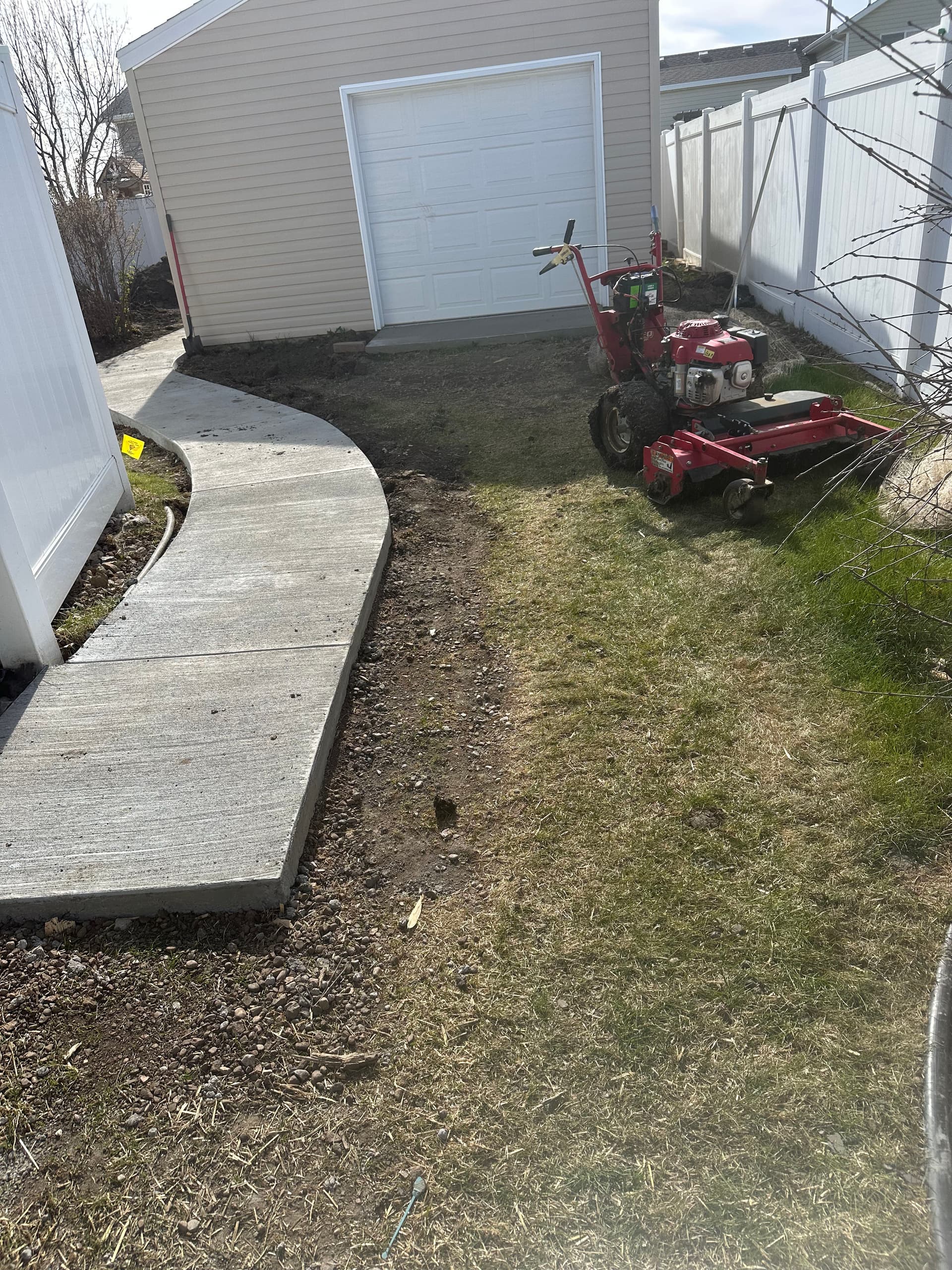
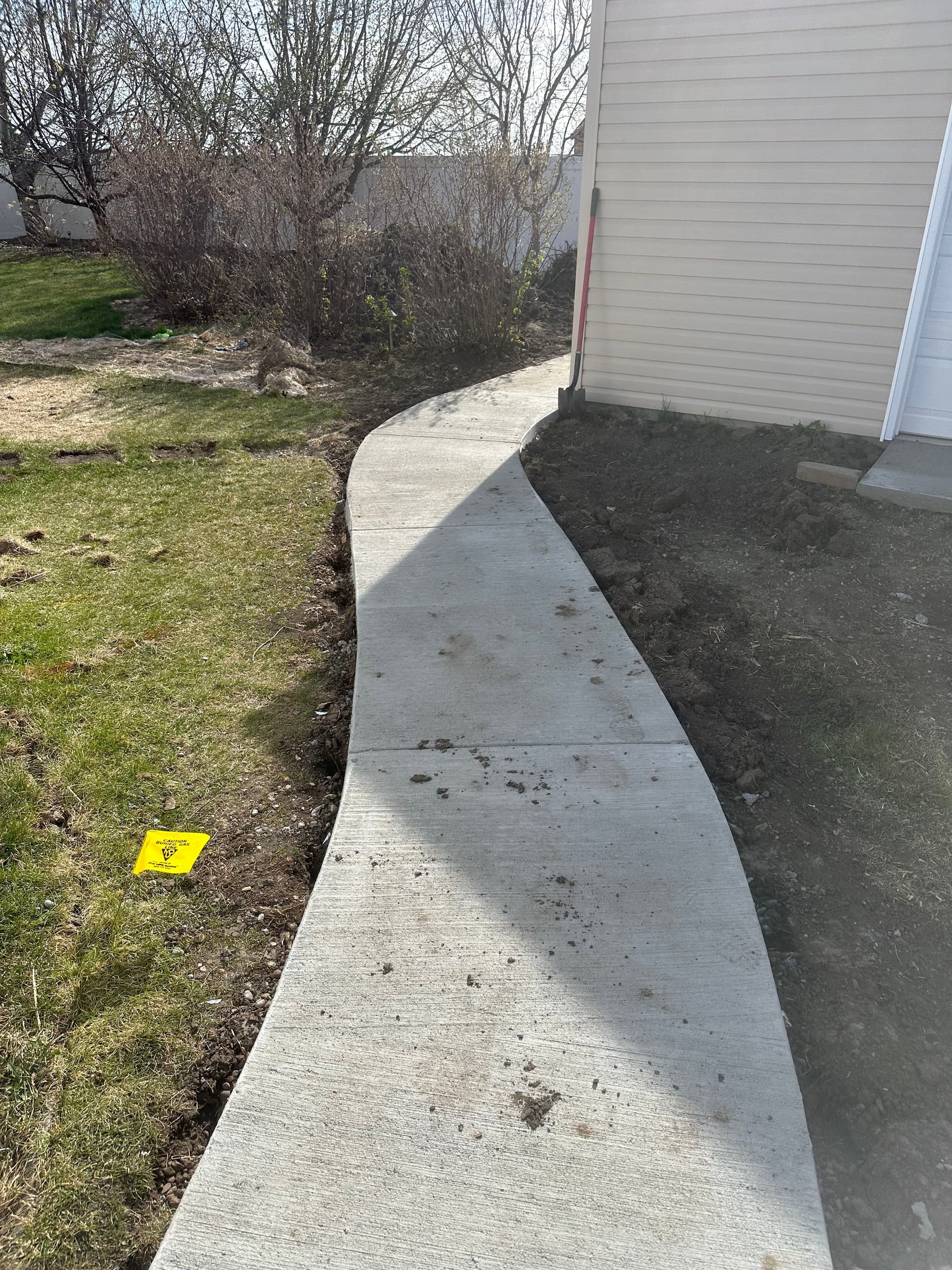
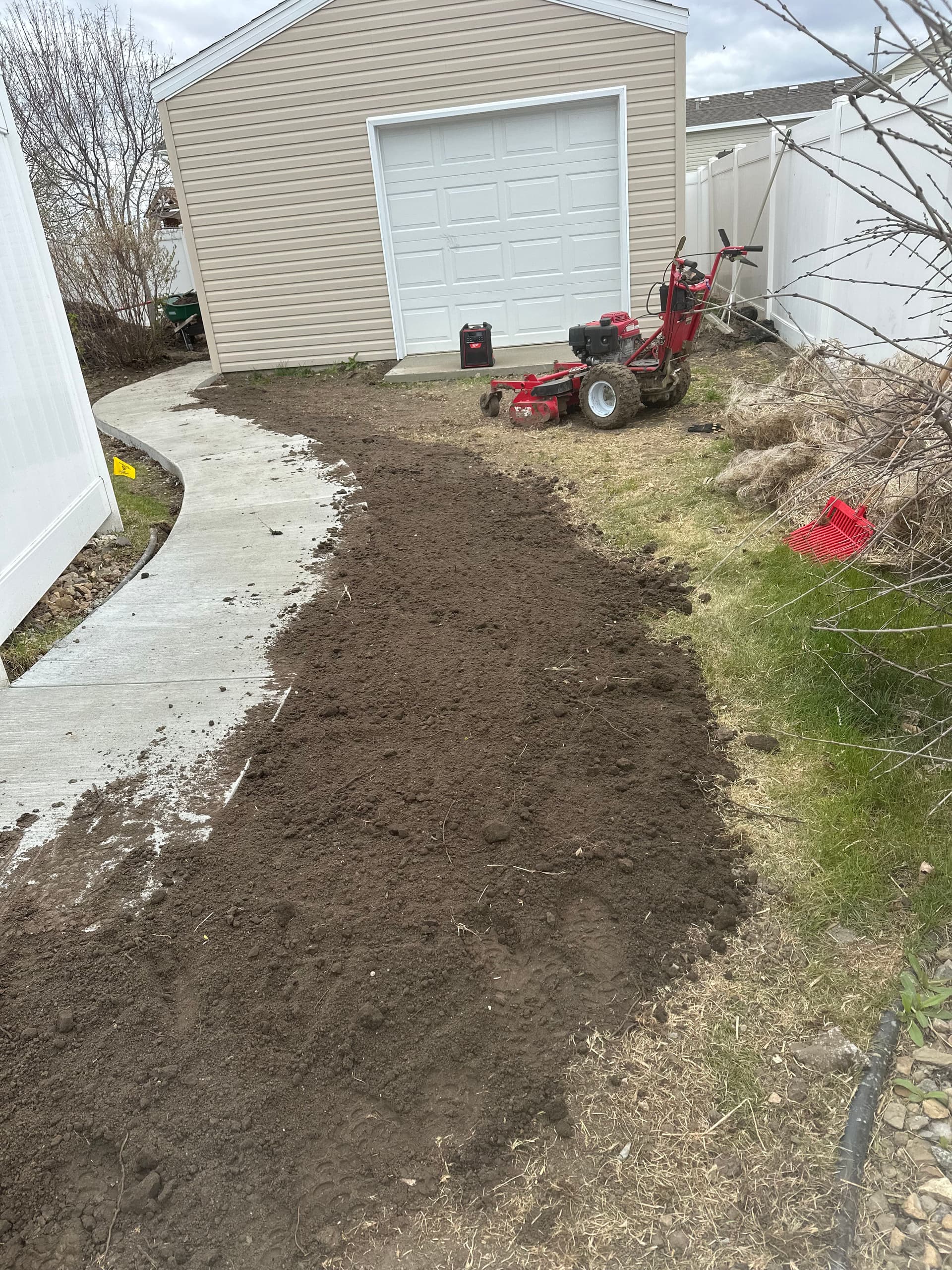
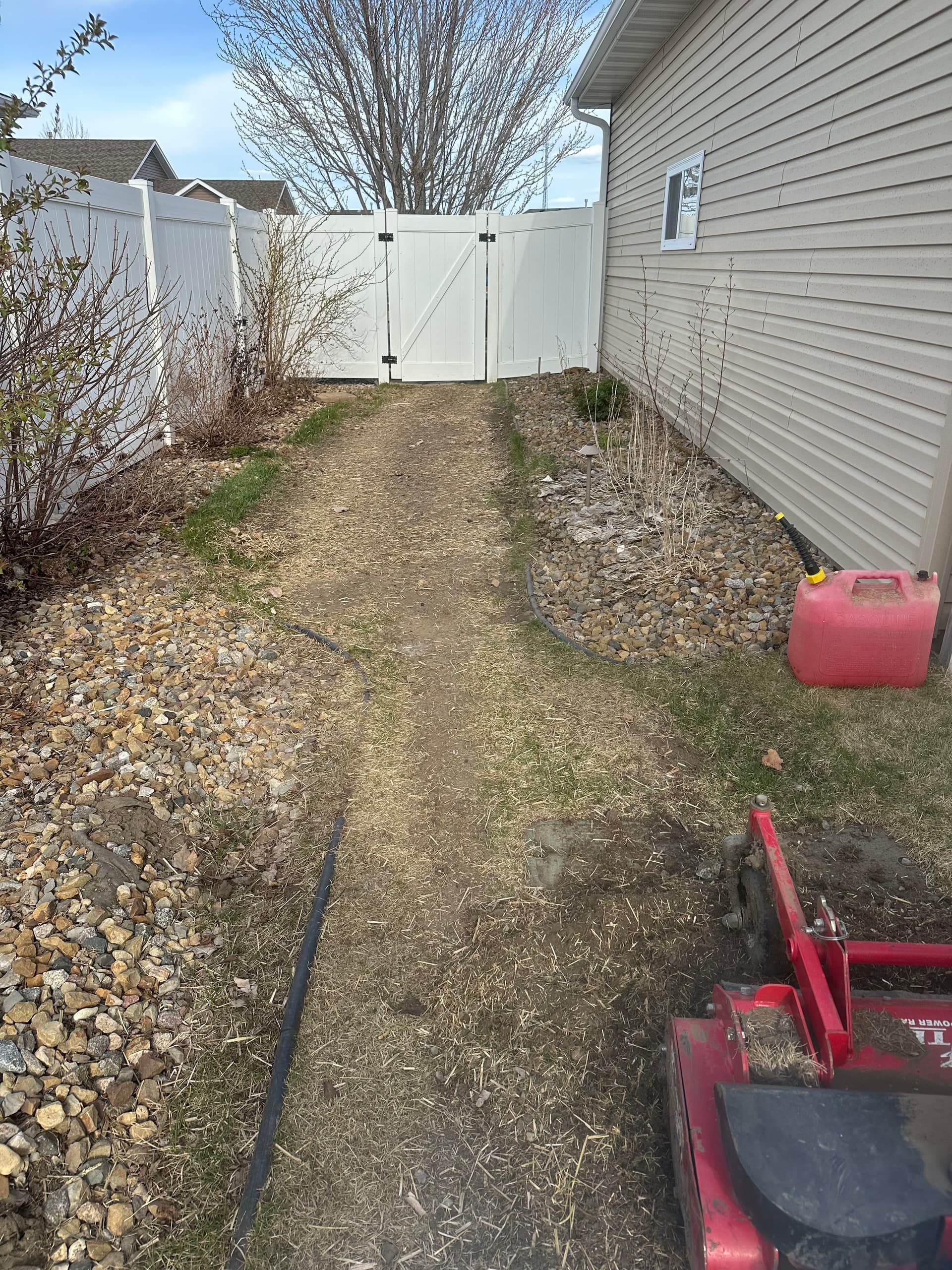
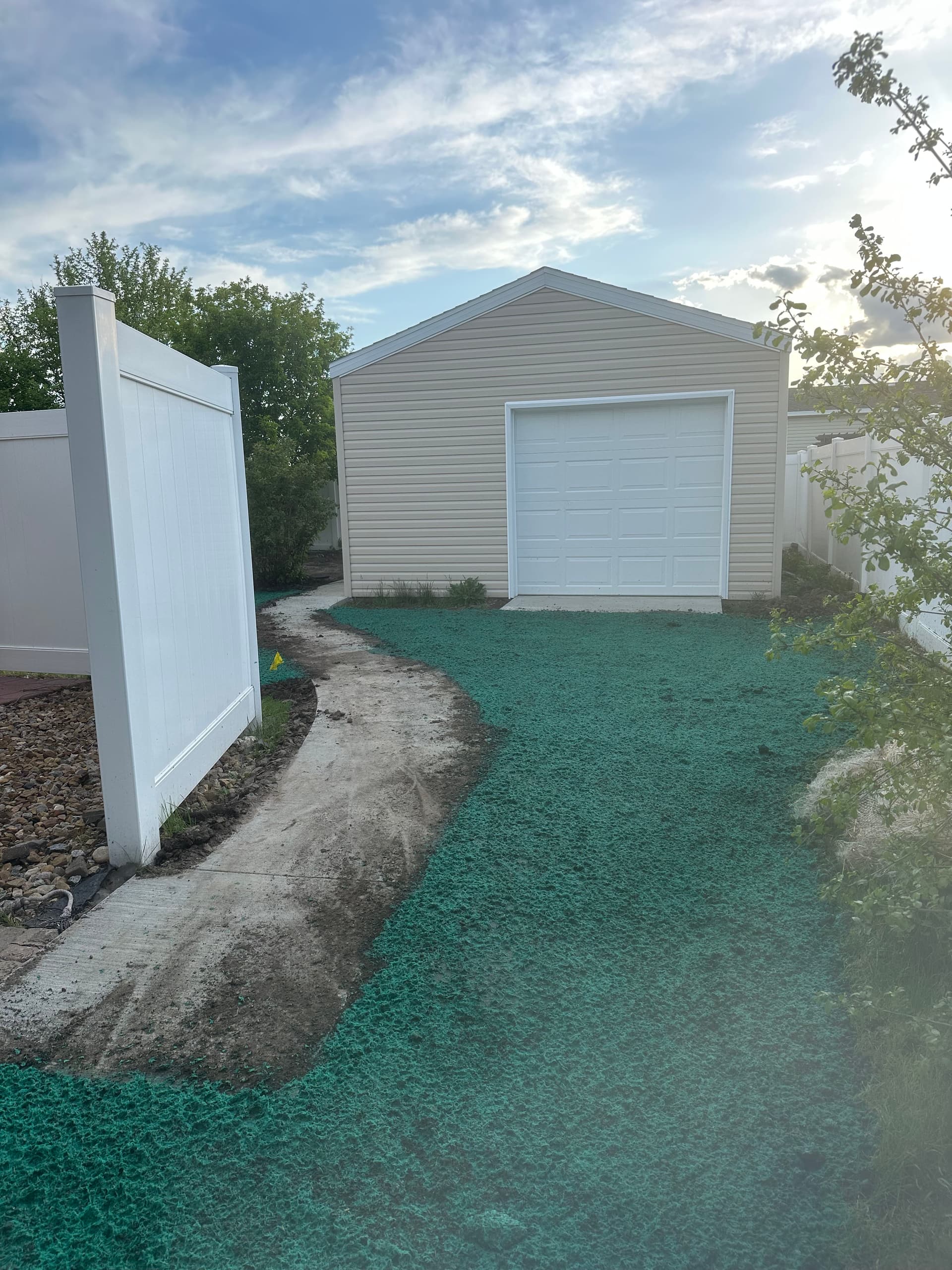
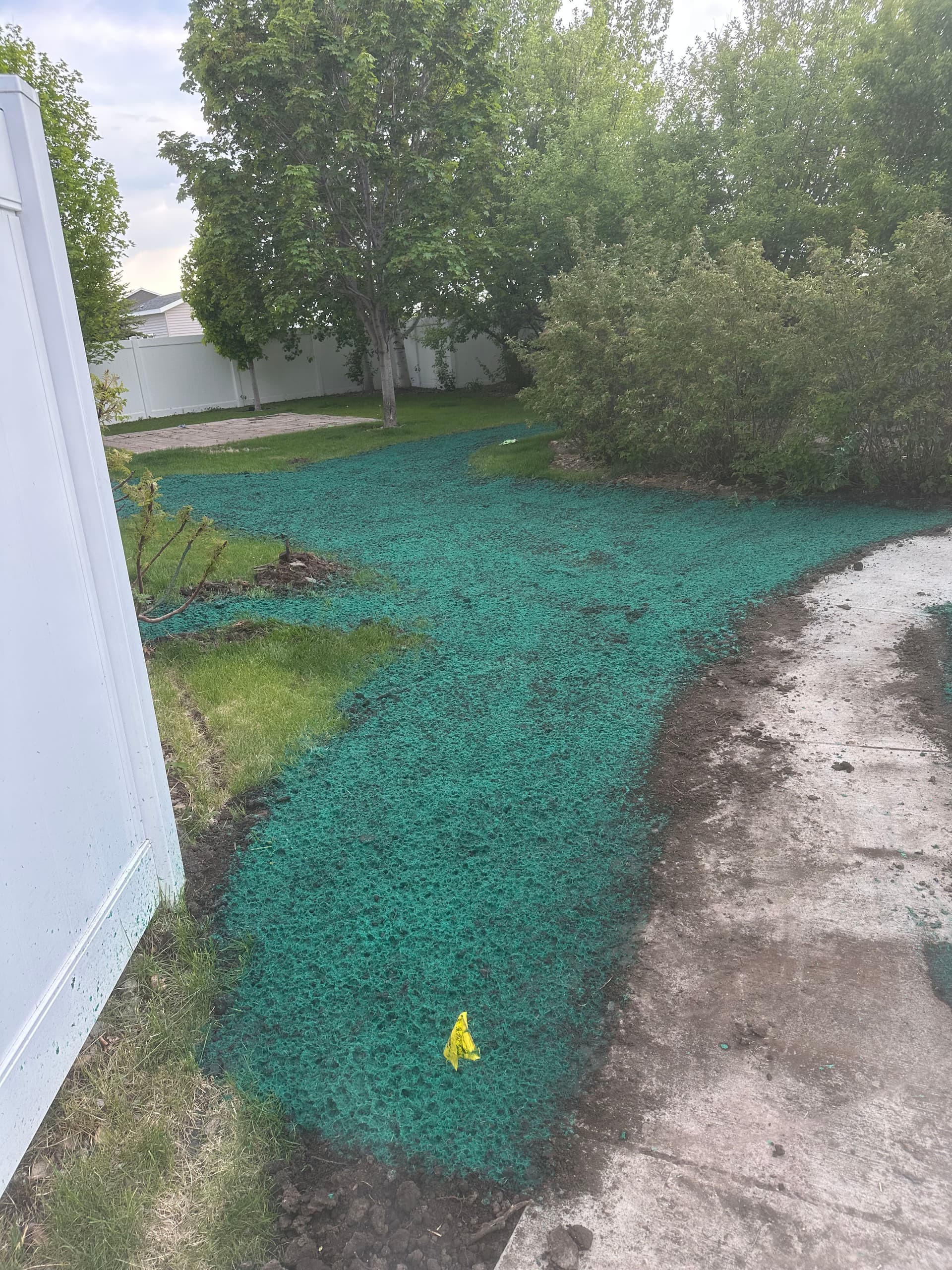
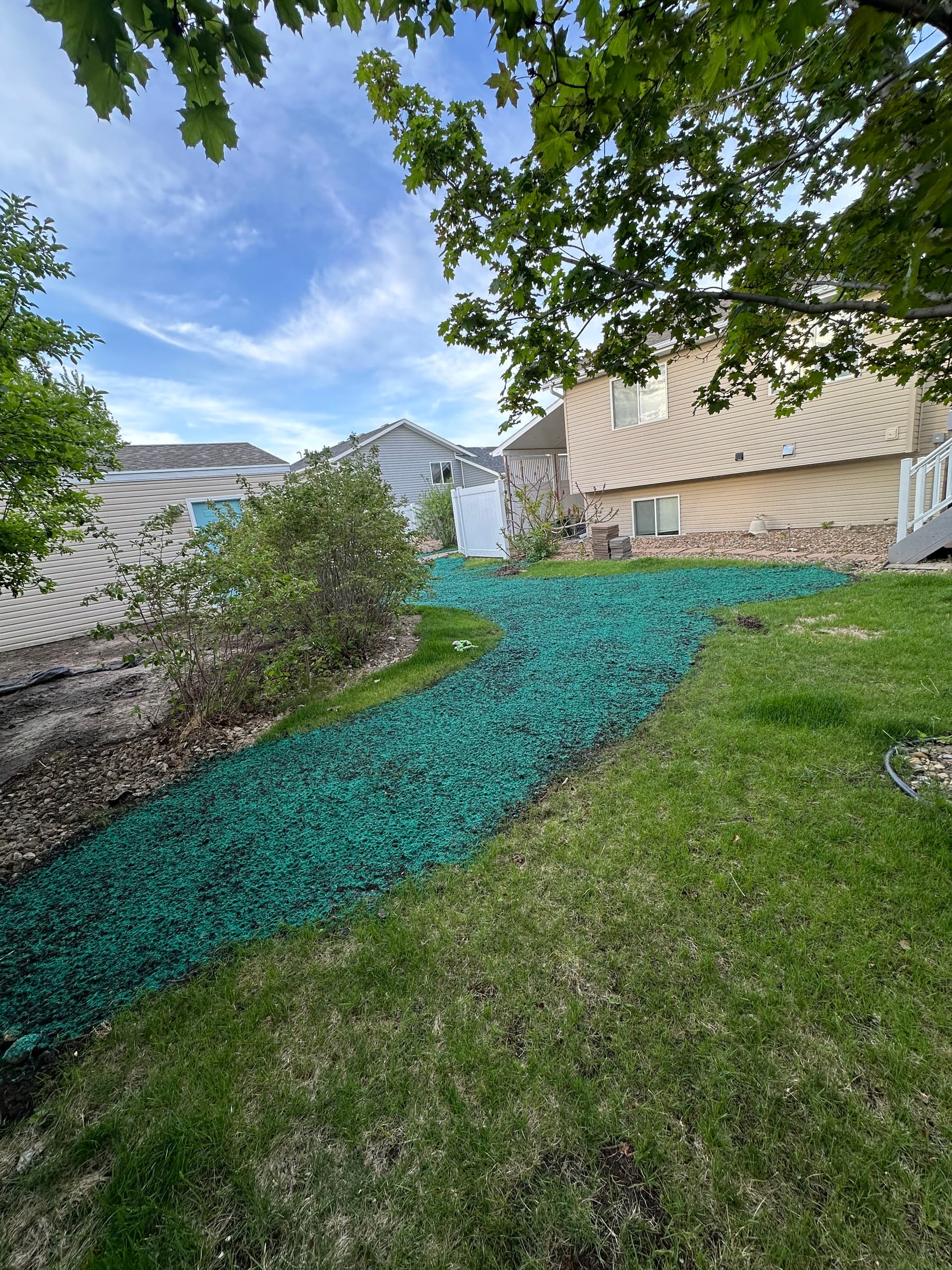
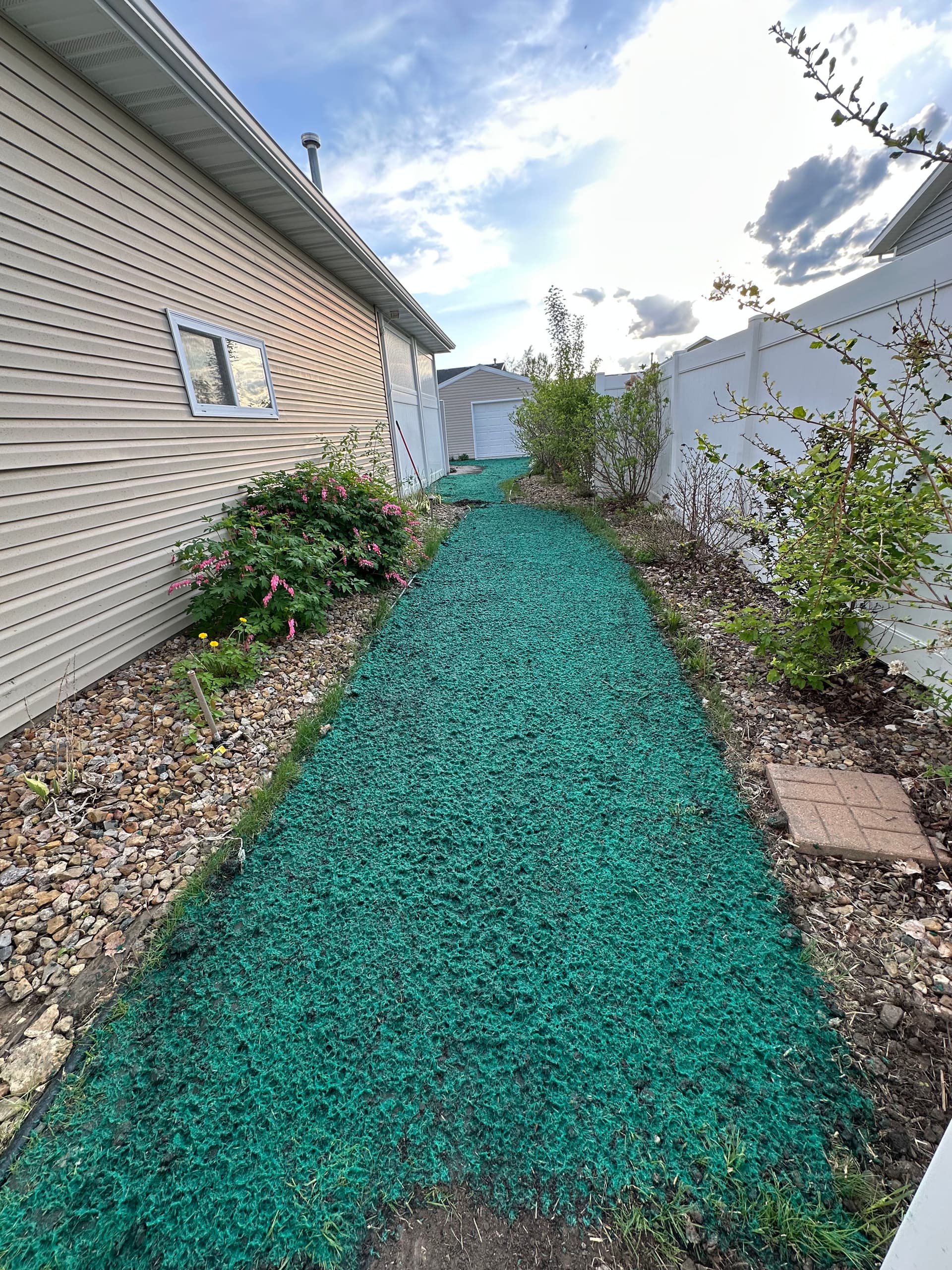
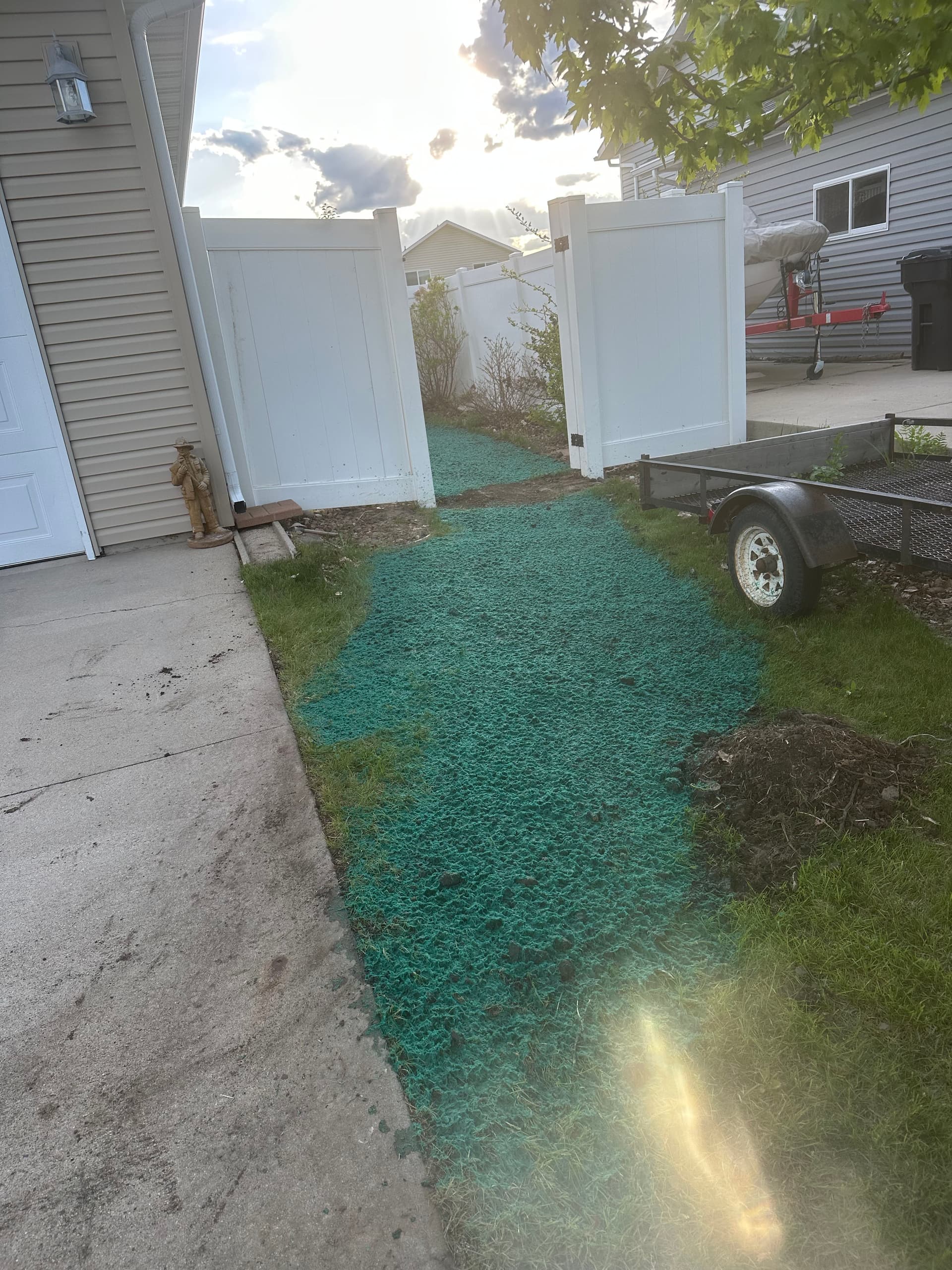
Construction does a number on a yard. New concrete goes in, equipment rolls through, and what's left behind is a patchwork of compacted soil, bare spots, and torn-up turf. That's exactly what we were dealing with here after a new walkway and shed apron were installed. The yard needed more than just seed thrown on it - it needed a real reset from the ground up.
Before we could hydroseed anything, the soil prep had to happen first. Equipment traffic compacts the ground hard, and if you just seed over that without breaking it up and bringing things back to grade, you're wasting your time. We worked through the affected areas with a walk-behind tiller, loosened the compacted zones, and got the grade right so water would move the way it should.
Once the soil was ready, we applied hydroseed across all the disturbed areas - along the new walkway edges, the side yard corridor, and the open area near the shed. Hydroseed works so well for situations like this because the slurry bonds seed, fertilizer, and mulch together in one application. It holds moisture against the soil surface and gives the seed a much better environment to germinate than bare seed on rough ground ever would.
The teal-colored hydroseed slurry you see covering the ground isn't just for looks - it's a tackifier and mulch blend that protects the seed from washing away and drying out. It's especially useful in tight spots like side yards and areas next to hard surfaces where runoff can be a problem. Every square foot of disturbed ground got covered cleanly, right up to the walkway edge and fence line.
If your yard took a hit from a construction job and you're staring at bare dirt and compacted patches, that's exactly the kind of work we do. Good soil prep followed by hydroseeding is one of the most reliable ways to get a thick, healthy lawn back without the cost and hassle of sod.